
The answer to South Sudan's crisis will be South Sudanese.
ALDO was founded on a conviction the evidence supports: development lasts when it is owned by the people it serves.
Born from experience. Built for ownership.
The Agrarian Livelihoods Development Organization was founded and registered in 2026 by South Sudanese professionals, peacebuilders, educators, gender advocates, and community leaders who had spent their careers inside the international aid system and understood both its power and its limits.
For more than a decade, the global humanitarian community has promised to shift resources and decision making to national organizations. The promise is called localization. The delivery has lagged: by most estimates, well under five percent of humanitarian funding reaches national and local organizations directly. ALDO exists to be ready when that promise is kept, and to prove, program by program, why it should be.
We are dedicated to improving agroecosystems, food security, nutrition, and sustainable development among vulnerable communities, working across water and sanitation, education, advocacy, climate resilience, gender equality, and youth empowerment to build resilient and self-reliant communities.
Progressive and resilient communities with sustainable livelihoods, improved quality of life, and equal opportunities for all.
To enhance the well-being of vulnerable populations through sustainable livelihood development, equitable land rights, improved food security, access to basic services, and community empowerment.
Eight values. Zero exceptions.
Accountability
We take responsibility for our actions and commitments, to communities and to funders alike.
Transparency
We operate openly and honestly in all our activities, and we publish what we do.
Integrity
We uphold strong moral and ethical principles, with zero tolerance for corruption.
Inclusiveness and equity
We promote equal opportunities and value diversity in everything we build.
Community participation
Communities identify needs, plan, and implement with us, not for us.
Sustainability
We support long term solutions that protect both people and resources.
Partnership
We work with government, donors, and civil society to achieve shared goals.
Human dignity
We treat every person with respect, fairness, and compassion, without condition.
Structured for scrutiny.
Governance. ALDO is governed by a General Assembly, which elects a Board of Directors. The Board appoints and oversees the Executive Director, who leads a Programs Director and eight departmental managers covering food security and livelihoods, health, nutrition and WASH, education, protection, monitoring and evaluation, communications, partnerships, and finance and administration.
MEAL. A Monitoring, Evaluation, Accountability and Learning framework underpins evidence based programming, with participatory monitoring, community feedback desks, hotlines, and suggestion boxes ensuring two way communication with the people we serve.
Safeguarding and PSEA. We maintain strict child safeguarding and Protection from Sexual Exploitation and Abuse standards, embedded in recruitment, training, and program design. Do No Harm is a design principle, not a slogan.
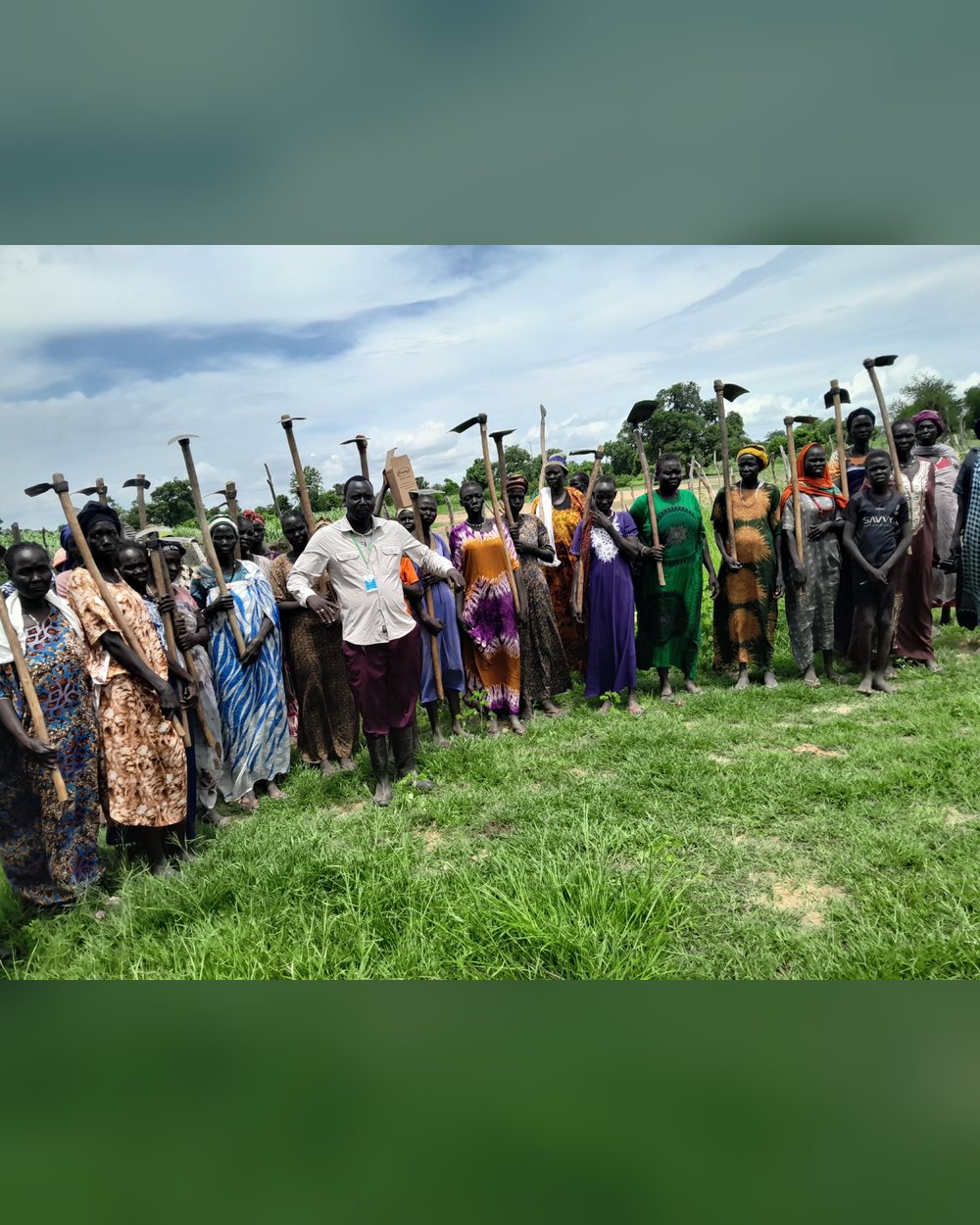
Localization in practice. We work through community rooted structures, chiefs, women's groups, and local volunteers, so that what we build remains when a project ends.
Watch: ALDO in 90 seconds
Our introduction film is in production. It will premiere here and on our YouTube channel.
The case in six lines.
Locally led, community trusted
National staff, national ownership, and the access that only proximity earns.
Nexus approach
Humanitarian response, development, and peace, integrated rather than siloed.
Gender and youth at the core
Programs designed around the people who carry South Sudan's future.
Technical depth
Conflict sensitivity, climate resilience, and biodiversity conservation expertise.
Hard to reach, reached
The ability to serve remote and underserved communities others cannot.
Zero tolerance for corruption
Strong accountability mechanisms, open books, and audited reporting.